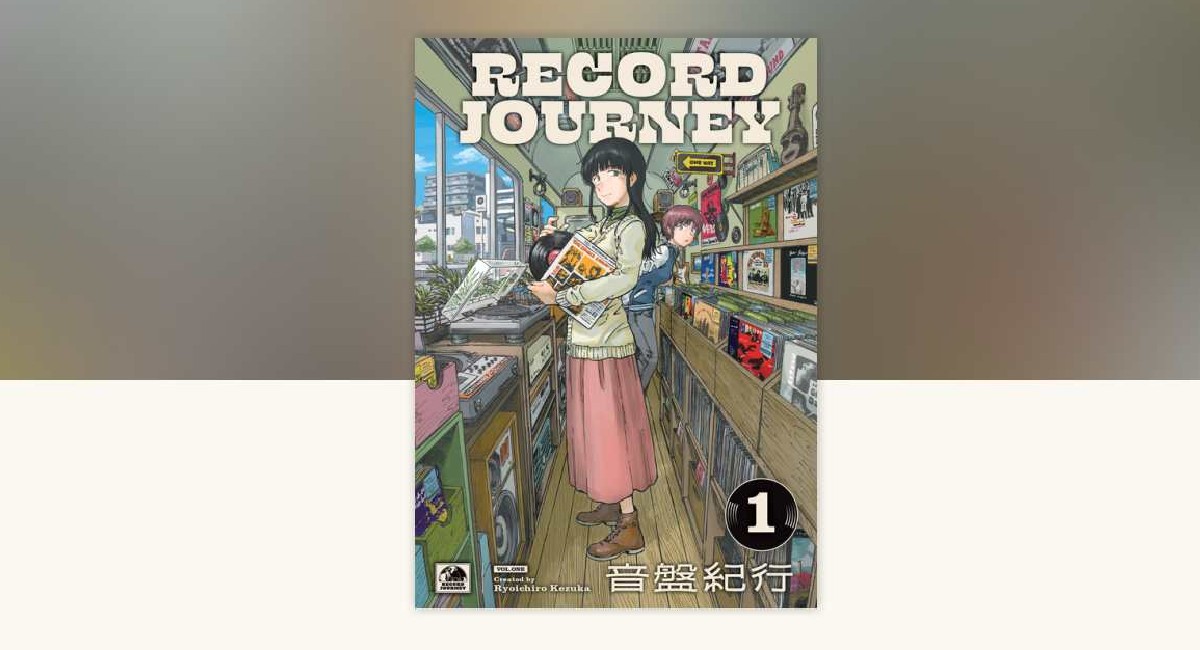
This review is for Record Journey, Volume 1, created by Ryoichiro Kezuka. Titan Manga provided a free copy of this book in exchange for a review.
Step into the soul of Tokyo in this musical manga – a beautifully drawn collection of stories.
Fleeting encounters, forgotten records, and quiet moments speak volumes through Ryoichiro Kezuka’s breathtaking art and storytelling.For the first time in English, experience Record Journey Vol. 1, a captivating collection of short stories by Ryoichiro Kezuka that explores the quiet, powerful intersections of music, memory, and everyday life.
At the heart of these stories is a young woman working at a small record store in Tokyo. Each story introduces a new visitor to the shop—each with a unique past, a specific record in mind, and an emotional thread waiting to be uncovered. As the needle drops, so do the walls between strangers, revealing bittersweet moments, long-lost connections, and the smooth healing of sound.
Originally self-published before Kezuka’s commercial debut, these stories are richly illustrated and emotionally resonant, blending slice-of-life realism with a gentle, introspective tone.
Kezuka, also known for Onban Kikou—a manga about forbidden pop music and jukebox mysteries—has carved a distinct place in the world of manga with his love for vinyl culture and human stories.
Record Journey is a must-read for music lovers, manga fans, and anyone who’s ever found a memory hiding in a melody.
Like a well-loved LP, Record Journey is a collection of short stories in manga form—each one spinning around music, memory, and the people who can’t let go of either.
The first volume, written and illustrated by Ryoichiro Kezuka, follows multiple characters across multiple settings, but everything ties back to one thing: records. Not streaming. Not playlists. Physical, crackling, hold-in-your-hands vinyl.
Story One: The Mysterious Record
The volume opens with Mayana, who’s selling her late grandfather’s record collection to Miyama Koyomi of Miyama Records. While digging through the haul, they stumble upon a mysterious record. Koyomi’s pride as an expert is on the line, so she teams up with Mayana to uncover its origins.
Their investigation leads them to a Payal restaurant, where a staff member hands them a dictionary. The word on the record means “memories” and “recollections.” Then, mid-bite, Mayana has a flashback—the food is familiar and a photo on the wall triggers something deeper.
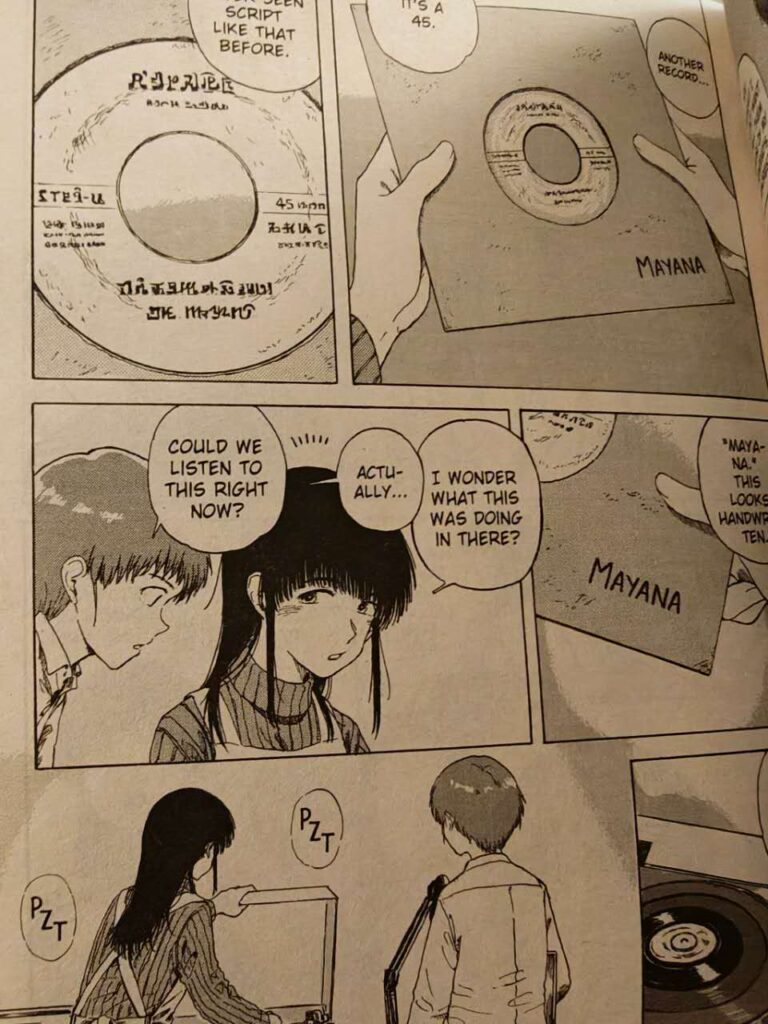
Back home, they dig through photo albums and discover that Mayana’s grandmother was the spitting image of Mayana herself. The mystery deepens, and the duo set off to find one of granddad’s old friends, leading to stories about the man Mayana never really knew.
Later, Koyomi sells a record she bought from Mayana and feels a pang of nostalgia. She runs into Mayana at the Payal cafe—where Mayana now works and is learning the language.
Story Two: The Pirate Radio Girl
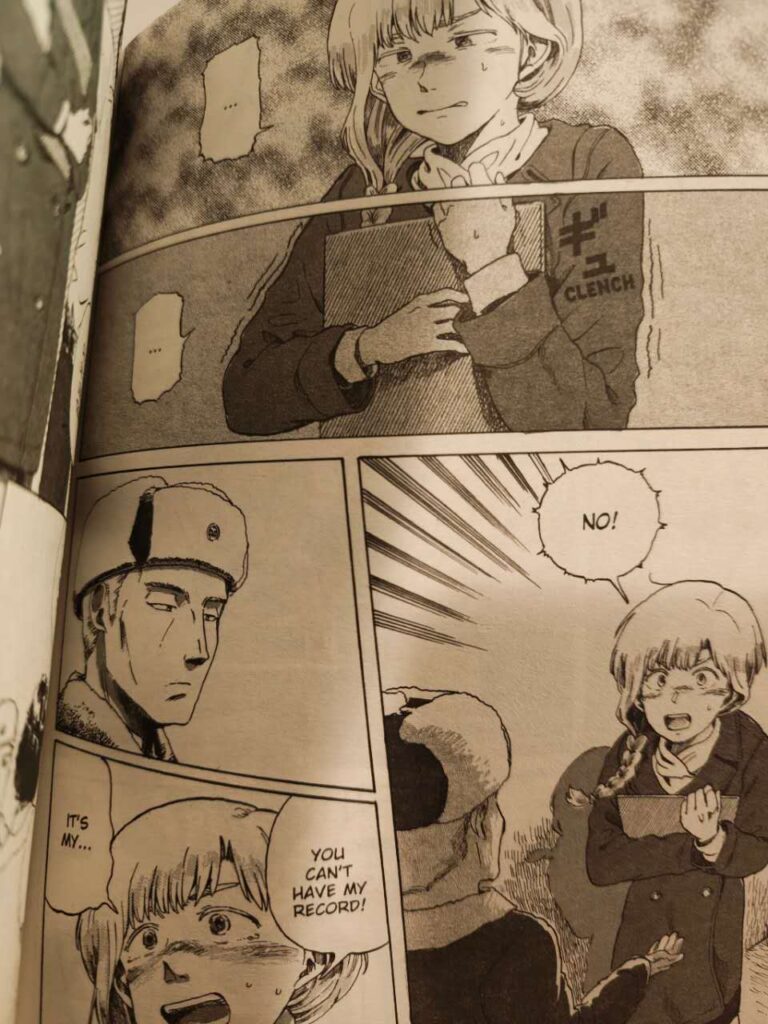
The second story shifts to what appears to be Soviet Russia. A young girl named Lana witnesses a man being beaten by police for carrying a banned book. Through eavesdropping on some customers at her work, she discovers a shop that sells contraband and asks for a rock record. After boldly asking him for a banned record, the proprietor panics and drags her aside.
Lana admits she’s been listening to pirated music over the radio. The proprietor warns her to stick to listening—owning contraband could get her arrested. One day, the pirate station goes silent, leading die-hard listeners like Lana to fear the ship sank.
But the proprietor eventually helps Lana smuggle in her requested record. When police raid the shop while she’s holding it, panic sets in—until the proprietor later reveals he pasted a fake cover on it. (Tee-hee!) Crisis averted. By the end, Lana finds her calling: connecting music lovers with the record shop, ensuring passion survives the hard times.
Story Three: The Band and the Bootleg
A band called The Staggs (an obvious riff on The Beatles) slips away from their manager to explore the city. They stumble into a bootleg record shop and unintentionally insult it. Sara, the young woman working there, challenges them to a musical duel.
Her mentor secretly records the session. Years later, Koyomi listens to the bootleg and notices something odd—background sounds the band never intended.
Stories Four and Five: The Pirate Radio Origin
These two connected stories focus on the pirate radio station from Story Two. We learn the station planned to go silent, temporarily, out of fear of being caught by the police. The crew temporarily returns to England for repairs, picking up a stranded student named Aino along the way.
Aino is starstruck by Nikki, the DJ, impressed by her professional voice. But a storm hits and lightning damages the antenna, leading to the broadcast coming to a stop. During the storm, Aino is washed overboard and nearly drowns. Nikki jumps in with a life preserver and saves her.
When Aino wakes up, the two clear up a misunderstanding—Nikki thought Aino cut off the broadcast, but, as mentioned earlier, it was lightning. They bond, and Nikki helps Aino process her near-death trauma. On land, they dodge what they think is a police car and get Aino to school. The story ends on a hopeful note: the girls kept in touch through letters, distance be damned.
Story Six: The Jukebox Dream
The final short story takes place in a diner, where a jukebox plays a Staggs record. A group of young people decide to cut their own record. Not without a bit of drama, the group succeeds in recording their song, which ends up in the diner’s jukebox.
The Afterword
Kezuka includes an afterword offering insight into his creative process—a nice touch for readers who want to peek behind the curtain.
Overall
What I loved most about Volume 1 is how connected the stories feel. The anthology structure isn’t a gimmick—the characters and places echo across chapters, rewarding attentive readers. It’s a pleasant surprise (I didn’t read the synopsis before I began reading—I know, I’m a problem. lol) that elevates the whole volume.
That said, I struggled to stay focused at times. The art style and subject matter didn’t fully click with me—and I say this as someone who grew up loving vinyl and inherited a collection I later donated when I ran away to start my new life in California. (Bit of Redbeanjelly lore for ya there!) Despite that personal disconnect, I can recognize what Kezuka is doing here. In a sea of licensed titles that all feel the same, Titan Manga deserves credit for bringing something genuinely different to English-speaking audiences.
Record Journey retails for $12.99 and is available at most booksellers, including Barnes & Noble and Amazon. Did it resonate with me? Not entirely. But who’s to say you won’t love it?
Discover more from Redbeanime
Subscribe to get the latest posts sent to your email.