
Our review of Heated Rivalry is a bit retroactive. I’ve watched every episode, read the books, and long planned to review the series—but Episode 5 pushed me over the edge. I found myself thinking, “Oh God, I need to talk about this right now.” There’s a reason critics are raving about this episode and why it earned a perfect 10 on IMDb, backed by more than 4,000 reviews.
(Reviews of the first four episodes will come later… I’m still recovering from Episode 5.)
Director Jacob Tierney elevates the source material through his writing. I’ve always believed that faithful book-to-live-action adaptations don’t need to replicate the text beat-for-beat, as long as they meet three criteria: first, they preserve the spirit and message of the original; second, they hit the story’s most important beats; and finally, they use the strengths of live action to accomplish what the page cannot.
Sex and Intimacy

Episode 5 is much tamer in terms of sex scenes. In fact, it includes none at all. Instead, the episode shows the moments before and after, and somehow that restraint makes the intimacy feel even stronger. Sex was—and still is—a major part of how Shane and Ilya communicate. It was once their primary way of expressing overwhelming lust and attraction, but their relationship now (arguably since Episode 2) means more than just a quick fuck.
The first moment takes place at the All-Star Game, after Shane comes out to Ilya (as if his being gay wasn’t obvious enough) and apologizes for panicking and running away—a scene that didn’t happen in the book, which author Rachel Reid has since expressed regret over not including. When Ilya opens up about his father, his carefully constructed mask crumbles. He turns away and apologizes, framing his tears as a loss of masculinity. The moment mirrors the vulnerability Ilya shows in Boston in Episode 4, when he calls Shane by his first name. But this time, instead of running away in a panic, Shane stays. He clambers into Ilya’s lap. He kisses him. He hugs him. He offers comfort—a refuge.
The scene then cuts to Shane leaving—an echo of Episode 4, but with crucial differences. Shane doesn’t rush out. He pauses and looks back at Ilya, who lounges in bed and watches him go, relaxed in a way we haven’t seen before. The same lightness settles over Shane. He smiles as if a weight has lifted from his shoulders. And when Ilya calls his name again, Shane responds by calling him by his first name.
We don’t fully grasp how tightly wound Shane is—or how intensely private he can be—until this moment. This is a Shane who has come to terms with his sexuality, who has finally accepted his feelings for Ilya.
The second moment comes two weeks later. The two lie in bed together, but no one rushes to get dressed or leave. Shane jokes, offering a preemptive apology for destroying Boston in that night’s game, and Ilya fires back by announcing to the world that Shane is the asshole. The exchange feels playful and teasing—something we rarely see from them outside of sex jokes. Around each other, they can be themselves.
There’s also a bittersweet edge for book readers. As adorable as these moments are, they exist within the constant reality that Shane and Ilya must keep their relationship hidden from the outside world.
Ilya’s Walls Come Down
The third time the two have sex occurs while Ilya is in Moscow, arranging his father’s funeral. Unlike the first two encounters, this scene carries a sharper edge. Ilya deliberately uses sex as a shield—a way to numb himself and forget the pain, if only briefly.
But there’s only so much pain a person can hold before it becomes unbearable.
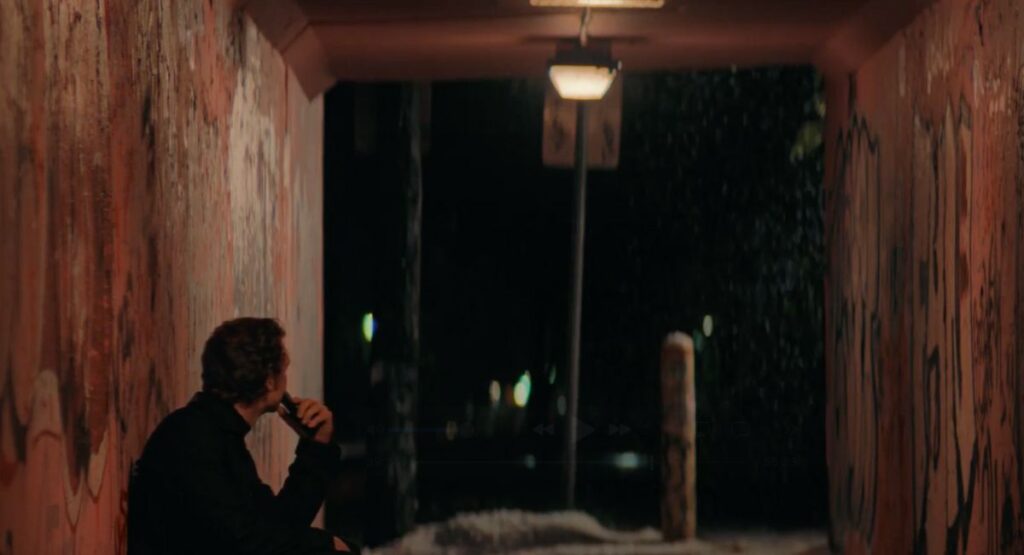
Tierney expands on Ilya’s time in Moscow and his fraught dynamics with his family—material we never see in the book. A soundtrack reminiscent of a medieval chant hums in the background. When Ilya calls Shane, he isn’t in his room. He stands alone in a tunnel as snow falls around him. The moment feels lonely. Cold. Suffocating. This time, when Shane offers him space to talk, Ilya takes it.
Even without understanding Russian, Connor Storrie’s inflections convey Ilya’s frustration, anger, hurt, guilt, and grief with devastating clarity. It’s gut-wrenching. His brother keeps demanding more when Ilya has nothing left to give. He has lost his mother, his father, and, in many ways, his brother. Russia no longer feels like home.
Shane is his home. Ilya confesses as much when he says:
“I have no one. Well, not no one. I have Svetlana. She loves me, and I love her. But not like… Fuck me. But not like I love you. That’s the worst fucking part of all this is that all I want is you. It’s always you. I’m so in love with you and I don’t know what to do about it.”
On the other end of the call, Shane listens with his eyes closed, his brow slightly furrowed. Even though he doesn’t understand what Ilya’s saying, he clearly feels the weight of every emotion carried in Ilya’s voice. When Shane opens his eyes again, they shine with unshed tears. Connor Storrie’s Russian monologue feels awards-worthy, but Hudson Williams’s performance in this moment is just as affecting.
For me, it’s after Ilya’s confession that his walls truly come down. When Shane asks how to say, “I wish you were here right now,” in Russian, Ilya replies—in Russian—“I wish I was too.” He glances away almost immediately, his expression shy, as if he can’t quite believe he allowed himself to say it out loud.
Svetlana and Rose’s Friendships
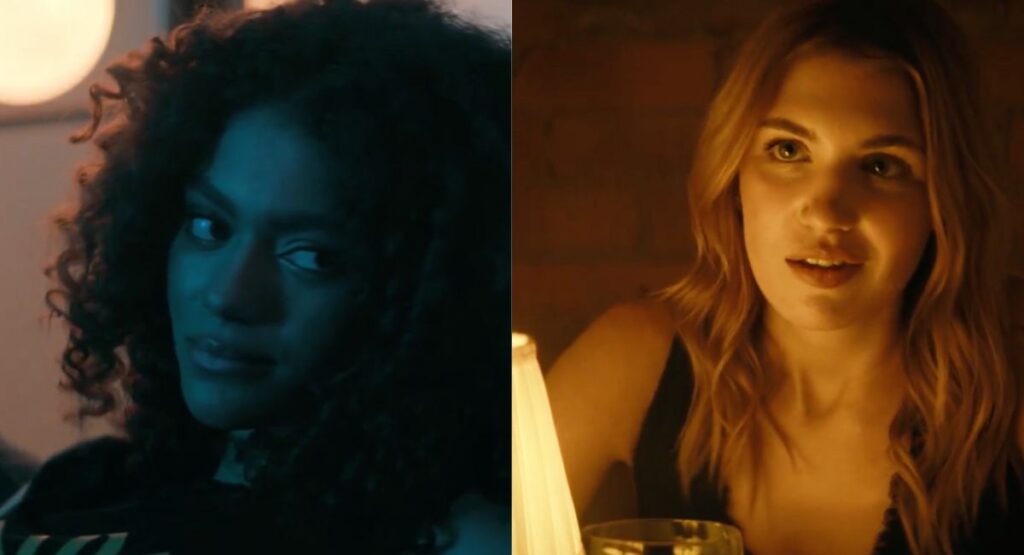
One of the most significant changes Tierney makes in the adaptation is expanding Svetlana’s role. In the book, she’s someone Ilya hooks up with whenever he’s in Boston, and they grow closer largely because she’s his go-to Boston girl. In the series, Svetlana (Ksenia Daniela Kharlamova) still fills that role—but she’s also his childhood best friend and confidante.
Men, take note: women are damn perceptive.
During Ilya’s confrontation with his brother, Alexei hurls insults and homophobic slurs at him. Yet the one moment that truly rattles Ilya comes when Alexei insults Svetlana. She represents a safe haven for Ilya, someone he runs to when life—especially life in Russia—becomes overwhelming. Hearing his brother demean someone who has shown him such warmth pushes Ilya inward, leading him to disparage himself. He says he doesn’t “deserve her,” a doubt Svetlana shuts down immediately.
Ilya never explicitly comes out to Svetlana. Still, the tone of his voice when he tells her that he loves her carries a subtle desperation. How easy would it be if he loved her that way? But she knows—and he knows—that his heart belongs to “Jane.” Svetlana reassures him anyway, promising that she will always love him and always be there for him.
Shane coming out to Rose is handled just as thoughtfully. Like Svetlana, Rose clocks that Shane isn’t straight—but she never outs him. Instead, she invites him to dinner and deliberately chooses a quiet spot where they can talk. She tries to ease into the conversation, but when it becomes clear that Shane needs more directness, she shifts gears without ever becoming crass or invasive.
Williams portrays Shane’s discomfort and internalized homophobia with remarkable precision. Shane avoids eye contact, his body language tense and edging on fear. He panics and starts listing things he knows to be true—things he hopes sound “straight” enough—like how much he enjoys talking to Rose and spending time with her.
If it wasn’t already clear in Episode 4, Shane finally admits why he entered a relationship with Rose in the first place: he hoped he could “fix the problem [of being gay]” by being with a woman. Rose gently but firmly tells him that being gay isn’t bad, nor is it wrong.
Watching Shane come out is difficult in the best way. The scene blends relief with lingering terror and the crushing realization that he can no longer deny who he is. Williams captures all of it beautifully. At first, Shane can’t even speak as tears fill his eyes. Notably, when he finally answers Rose’s question out loud, it’s after remembering the stairwell kiss from Episode 2. Shane doesn’t just want Ilya—he wants a life with him. Everything.
The (Im)possibility of More

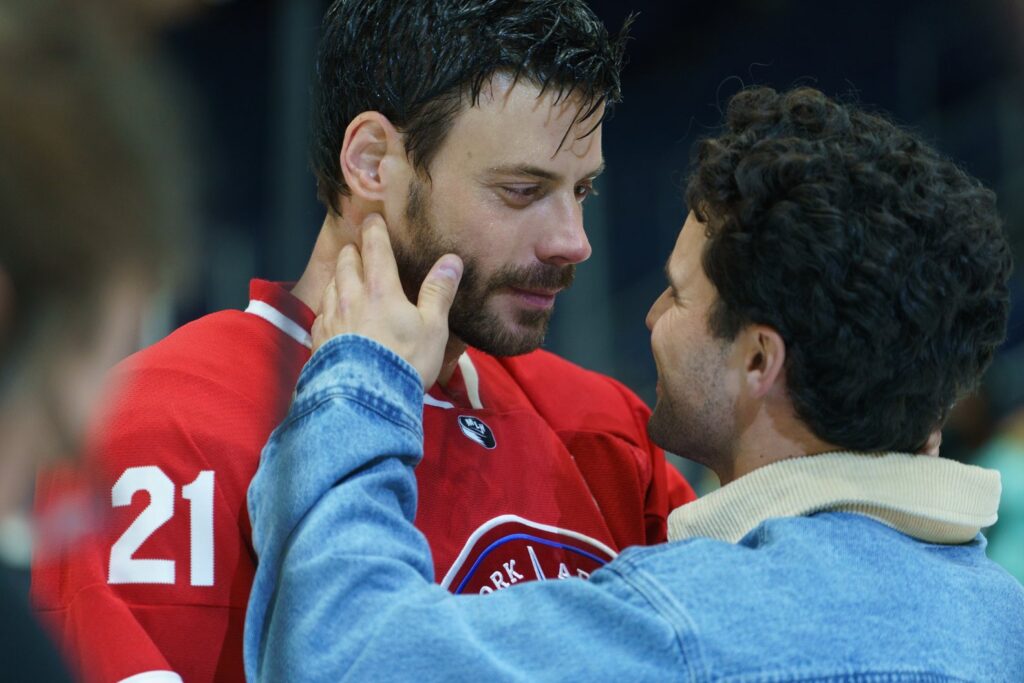
Throughout the episode, Ilya and Shane get a taste of the possibility of more. At the All-Star Game, they play on the same team for the first time (the helmet kiss!), and they quickly discover that they’re genuinely good together. Shane catches a glimpse of what their future could look like when he sees Ilya playing with kids—a moment that likely sparks a yearning he’s never allowed himself to consider.
Since Shane’s “official” coming-out to Ilya, he’s grown bolder in expressing his desire for more. He gives Ilya the code to his apartment, eliminating the need to sneak in through the back entrance. Later, while he’s in the hospital—high and loopy on pain meds—he invites Ilya to his cottage, offering them two uninterrupted weeks together.
But Ilya hesitates. He knows—and he knows that Shane knows—that there can’t be anything more between them. At the hospital, he tries desperately to cut Shane off, aware that he won’t have the strength to refuse if Shane asks for something deeper. Their relationship can only exist in fragments: a few stolen hours, a fleeting touch, brief glances, and shared smiles across the ice during a game.
The Game Changers… And Why Representation Matters
But it doesn’t have to be that way.
When Scott Hunter wins the Cup, he makes a pivotal decision. François Arnaud’s performance makes that choice feel monumental—you can see the conflict ripple across his face: fear of the repercussions, lingering shame, and finally a quiet, resolute determination to show Kip, and the world, that he loves the man he loves.
The camera cuts from Scott and Kip on the ice to Shane and Ilya watching the game unfold on their TV screens. It zooms in, tightening into close-ups of each man’s face. Neither can look away as they watch Scott lead Kip onto the ice. Recognition dawns slowly—understanding settling in—as they realize what’s about to happen. The dizzying cuts between Ilya and Shane, then Scott and Kip, and back again lend the moment a surreal quality. Is this really happening?
Scott Hunter’s very public coming out becomes the catalyst—the push Ilya needs to see that a future with Shane might actually be possible. The “maybe” Ilya allowed himself to say to Shane at the hospital read as a gentle rejection, but the Skip kiss transformed that uncertainty into something braver: maybe we can be together. Maybe there’s a future for us. Maybe I can love you the way I want to.
This moment doesn’t erase the challenges Scott will undoubtedly face, nor does it magically dismantle the structural homophobia embedded in the sport. But it does something just as vital: it reminds closeted players that they aren’t alone.
Like Ilya.
Like Shane.